By the way, here’s what Crowley says about the murders in Whitechapel:
"Technically, I digress; but I cannot refrain from telling her favourite story…. Mabel had … divided her career with a very strange man whose career had been extraordinary. He had been an officer in a cavalry regiment, a doctor, and I know not how many other things in his time. He was now in desperate poverty and depended entirely on Mabel Collins for his daily bread. This man claimed to be an advanced Magician, boasting of many mysterious powers and occasionally demonstrating the same. [somewhat in the ilk of Crowley himself.]
“At this time, London was agog with the exploits of Jack the Ripper. One theory of the motive of the murderer was that he was performing an Operation to obtain the Supreme Black Magical Power. The seven women had to be killed so that their seven bodies formed a ‘Calvary cross of seven points’ with its head to the west. The theory was that after killing the third or the fourth, I forget which, the murderer acquired the power of invisibility, and this was confirmed by the fact that in once case a policeman heard the shrieks of the dying woman and reached her before life was extinct, yet she lay in a cul-de-sac with no possible exit save to the street; and the policeman saw no signs of the assassin, though he was patrolling outside, expressly on the look-out.
“Miss Collins’ friend took great interest I these murders. He discussed them with her and Cremers on several occasions. He gave them imitations of how the murderer might have accomplished his task without arousing the suspicion of his victims until the last moment. Cremers objected that his escape must have been a risky matter, because of his habit of devouring certain portions of the ladies before leaving them. The lecturer demonstrated that any gentleman in evening dress had merely to turn up the collar of a light overcoat to conceal any traces of his supper.
“Time passed! Mabel tired of her friend, but did not dare to get rid of him because he had a packet of compromising letters written by her. Cremers offered to steal these from him. In the man’s bedroom was a tin uniform case which he kept under the bed to which he attached it by cords. Neither of the women had ever seen this open and Cremers suspected that he kept these letters in it. She got him out of the way for a day by a forged telegram, entered the bedroom, untied the cords and drew the box from under the bed. To her surprise it was very light, as if empty. She proceeded nevertheless to pick the lock and open it. There were no letters; there was nothing in the box, but seven white evening dress ties, all stiff and black with clotted blood!”
Now you know the story of From Hell as reconstructed by Aleister Crowley. Go out and by the graphic novel. It's huge and expensive, it's graphically sexual, and extremely gory, but it's thrilling, and intelligent.
Crowley, Aleister, et al. The Confessions of Aleister Crowley. Grant, Kenneth and John Symonds, eds. Arkana Press: London, 1979. 691-692.
Showing posts with label whitechapel. Show all posts
Showing posts with label whitechapel. Show all posts
Sunday, April 6, 2008

Of Doctors and Whores
What can one say about From Hell? It is an intensely cerebral, thoroughly engrossing book which attempts to reconstruct the events of history using all available information and some conjecture in between. Very little has been fabricated, and much care has been taken to examine critically the secondary sources available on the subject. The subject is, of course, the gruesome Whitechapel murders of 1888. Few serial killers have been so bold and public about their clear misogyny.
One of the most intriguing things about this books is its quixotic portrayal of the killer. Many people might interpret the murder of prostitutes as a crime of sexually repressed passion mixed with some perceived slight made by prostitutes on the whole because of their liberal sexual natures and world views. In this way, to many people, Jack the Ripper is similar to Robert Pickton, who should have been called the “Vancouver Ripper” or “Robert the Ripper” or some other dehumanising name by the press. Writers Alan Moore and Eddie Campbell beg to differ. While the subject of sex is certainly dealt with in a very explicit fashion in From Hell, it becomes quite apparent that the murderer’s motives run far deeper than mere sexual frustration. However, sexual frustration does enter into the mixture of the question “what makes a murderer?”. One of the most clear pieces of conjecture in the piece is the size of the murderers … weapon, shall we say, which is conjectured to be so enormous as to have completely ruined his wedding night. (Yes, boys, size does matter.)
The goal of From Hell is to examine the Whitechapel murders. As Dr. Gull – the anticipated killer – puts it, “A GREAT work must have many sides from which we may consider it.” The most potent side, in my opinion, from which this illustrated penny-dreadful-cum-serial-novel would examine this “great work” is that of its occultic motives. Dr. Gull, like many men in London and indeed around Vancouver today, was a Freemason, and was therefore privy to the mythic/symbolic history of the world from which many of us have hidden our faces. (I could write at quite a length on the foolishness of thinking astrology has any less significance than physics or psychology. There is nothing more humanly powerful than symbol, as the Third Reich will attest, and it does us no end of harm to deny that.)
Anyway, as a result of Dr. Gull’s involvement with the Masons, he is privy to much more information about the construction of London than would be, for example, a coach driver or a police chief without having been inducted into the guild. It is this history that is the subject of chapter four, entitled “What Does God Require of Thee?” which is written almost entirely in verse.
One difference between the film and the book is that the film actual depicts some progress on the part of the police. The book does no such thing. The police are as stumped at the end as they are in the beginning. Everyone who knows exactly what is happening (i.e. all the Masons) knows exactly what is happening, and everyone who hasn’t been informed does not.
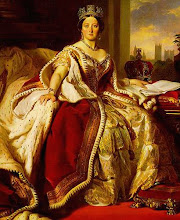
The reason for such secrecy is this: it seems Queen Victoria had a rather errant grandson who liked to spend his time on sweet-shop girls and brothel boys. He was married to a sweet shop girl who bore him a daughter, and was later implicated in a male brothel scandal, both of which needed to be quickly covered up. Because the sweet shop girl was acquainted with one of the whores in question, the knowledge of the child could easily have been passed about, if – for example – there were someone in her circle of friends in desperate need of money.
As a result, it is conjectured that Queen Victoria ordered the murders, the Masons covered them up, and that Dr. William Gull – the royal physician – performed the rituals. I find this thinking in astounding coordination with history and architecture. The moral here is clear: learn everything you can, because someone else is already using it against you. The theory of black magick is hammered home in the narrative by the appearance of Aleister Crowley at age fourteen in chapter nine. The lad is sucking on a candy cane (something Crowley was known for himself, if I’m not mistaken) and berates Inspector Abberline for ignoring the possibility of black magick. On page four of chapter nine, the center panel is wholly reminiscent of Crowley’s own photograph appearing on page 768.4 of The Confessions of Aleister Crowley taken just prior to his death. In addition, one of the quotes which opens chapter nine is from this self same book. It is with this kind of referential treatment that Moore and Campbell construct their story, and masterfully.
You know, one thing I noticed in reading this and watching Sweeney Todd is that no one who lived in London at the time seems to have had anything to say regarding the rancidness that was London. I think the closest literature we’ve got to describing the squalid conditions of London at the time in our anthology might be contained in Dante Gabriel Rossetti’s “The Burden of Nineveh.” I guess it just goes to show you what a democratic society can produce. Royals have a habit of killing their detractors.
Also, one wonders at the significance for twelve years after the 1900s that these grotesque rituals occurred twelve years before the beginning of the 1900s. Nineteen, after all, is the number of the Sun, as depicted by the Tarot. If Moore’s and Campbell’s discourse on sun deities is accurate (and believe me it is) then this could be extensively significant to 2012.
Anyway, keep watching the skis.
Ivy
Crowley, Aleister, et al. The Confessions of Aleister Crowley. Grant, Kenneth, and John Symonds, eds. Arkana Press: London, 1979. 768.4.
One of the most intriguing things about this books is its quixotic portrayal of the killer. Many people might interpret the murder of prostitutes as a crime of sexually repressed passion mixed with some perceived slight made by prostitutes on the whole because of their liberal sexual natures and world views. In this way, to many people, Jack the Ripper is similar to Robert Pickton, who should have been called the “Vancouver Ripper” or “Robert the Ripper” or some other dehumanising name by the press. Writers Alan Moore and Eddie Campbell beg to differ. While the subject of sex is certainly dealt with in a very explicit fashion in From Hell, it becomes quite apparent that the murderer’s motives run far deeper than mere sexual frustration. However, sexual frustration does enter into the mixture of the question “what makes a murderer?”. One of the most clear pieces of conjecture in the piece is the size of the murderers … weapon, shall we say, which is conjectured to be so enormous as to have completely ruined his wedding night. (Yes, boys, size does matter.)
The goal of From Hell is to examine the Whitechapel murders. As Dr. Gull – the anticipated killer – puts it, “A GREAT work must have many sides from which we may consider it.” The most potent side, in my opinion, from which this illustrated penny-dreadful-cum-serial-novel would examine this “great work” is that of its occultic motives. Dr. Gull, like many men in London and indeed around Vancouver today, was a Freemason, and was therefore privy to the mythic/symbolic history of the world from which many of us have hidden our faces. (I could write at quite a length on the foolishness of thinking astrology has any less significance than physics or psychology. There is nothing more humanly powerful than symbol, as the Third Reich will attest, and it does us no end of harm to deny that.)
Anyway, as a result of Dr. Gull’s involvement with the Masons, he is privy to much more information about the construction of London than would be, for example, a coach driver or a police chief without having been inducted into the guild. It is this history that is the subject of chapter four, entitled “What Does God Require of Thee?” which is written almost entirely in verse.
One difference between the film and the book is that the film actual depicts some progress on the part of the police. The book does no such thing. The police are as stumped at the end as they are in the beginning. Everyone who knows exactly what is happening (i.e. all the Masons) knows exactly what is happening, and everyone who hasn’t been informed does not.
The reason for such secrecy is this: it seems Queen Victoria had a rather errant grandson who liked to spend his time on sweet-shop girls and brothel boys. He was married to a sweet shop girl who bore him a daughter, and was later implicated in a male brothel scandal, both of which needed to be quickly covered up. Because the sweet shop girl was acquainted with one of the whores in question, the knowledge of the child could easily have been passed about, if – for example – there were someone in her circle of friends in desperate need of money.
As a result, it is conjectured that Queen Victoria ordered the murders, the Masons covered them up, and that Dr. William Gull – the royal physician – performed the rituals. I find this thinking in astounding coordination with history and architecture. The moral here is clear: learn everything you can, because someone else is already using it against you. The theory of black magick is hammered home in the narrative by the appearance of Aleister Crowley at age fourteen in chapter nine. The lad is sucking on a candy cane (something Crowley was known for himself, if I’m not mistaken) and berates Inspector Abberline for ignoring the possibility of black magick. On page four of chapter nine, the center panel is wholly reminiscent of Crowley’s own photograph appearing on page 768.4 of The Confessions of Aleister Crowley taken just prior to his death. In addition, one of the quotes which opens chapter nine is from this self same book. It is with this kind of referential treatment that Moore and Campbell construct their story, and masterfully.
You know, one thing I noticed in reading this and watching Sweeney Todd is that no one who lived in London at the time seems to have had anything to say regarding the rancidness that was London. I think the closest literature we’ve got to describing the squalid conditions of London at the time in our anthology might be contained in Dante Gabriel Rossetti’s “The Burden of Nineveh.” I guess it just goes to show you what a democratic society can produce. Royals have a habit of killing their detractors.
Also, one wonders at the significance for twelve years after the 1900s that these grotesque rituals occurred twelve years before the beginning of the 1900s. Nineteen, after all, is the number of the Sun, as depicted by the Tarot. If Moore’s and Campbell’s discourse on sun deities is accurate (and believe me it is) then this could be extensively significant to 2012.
Anyway, keep watching the skis.
Ivy
Crowley, Aleister, et al. The Confessions of Aleister Crowley. Grant, Kenneth, and John Symonds, eds. Arkana Press: London, 1979. 768.4.
Subscribe to:
Posts (Atom)